AI-Native Employee Relations That Scales
Harper provides 24/7 access for employees to raise concerns and intelligent triage to route issues appropriately.








The Employee Relations Challenge
Why ER Is Different — Employee relations requires a unique balance that most HR technology fails to address.
- Employees need easy ways to raise concerns
- But fear of exposure prevents many from speaking up
- Anonymous options create investigation challenges
- Quick response signals that concerns are taken seriously
- But rushing sensitive matters causes harm
- Every case has unique context
- Complete records protect the organization
- But employees worry about retaliation
- Paper trails can discourage candor
- HR teams can't be everywhere at once
- But ER matters require human discernment
- Automation risks seem high
Harper's Approach to Employee Relations
Harper supports employee relations—it doesn't replace HR judgment.
The system is designed to:
- Provide accessible first contact. Employees can raise concerns 24/7 through channels they trust.
- Gather relevant information appropriately. Structured intake without leading questions or premature conclusions.
- Route to the right people with appropriate urgency. Severity assessment ensures critical matters get immediate attention.
- Document completely and consistently. Every interaction captured for potential investigation or audit.
- Support employees throughout the process. Status updates, resource information, and ongoing availability.
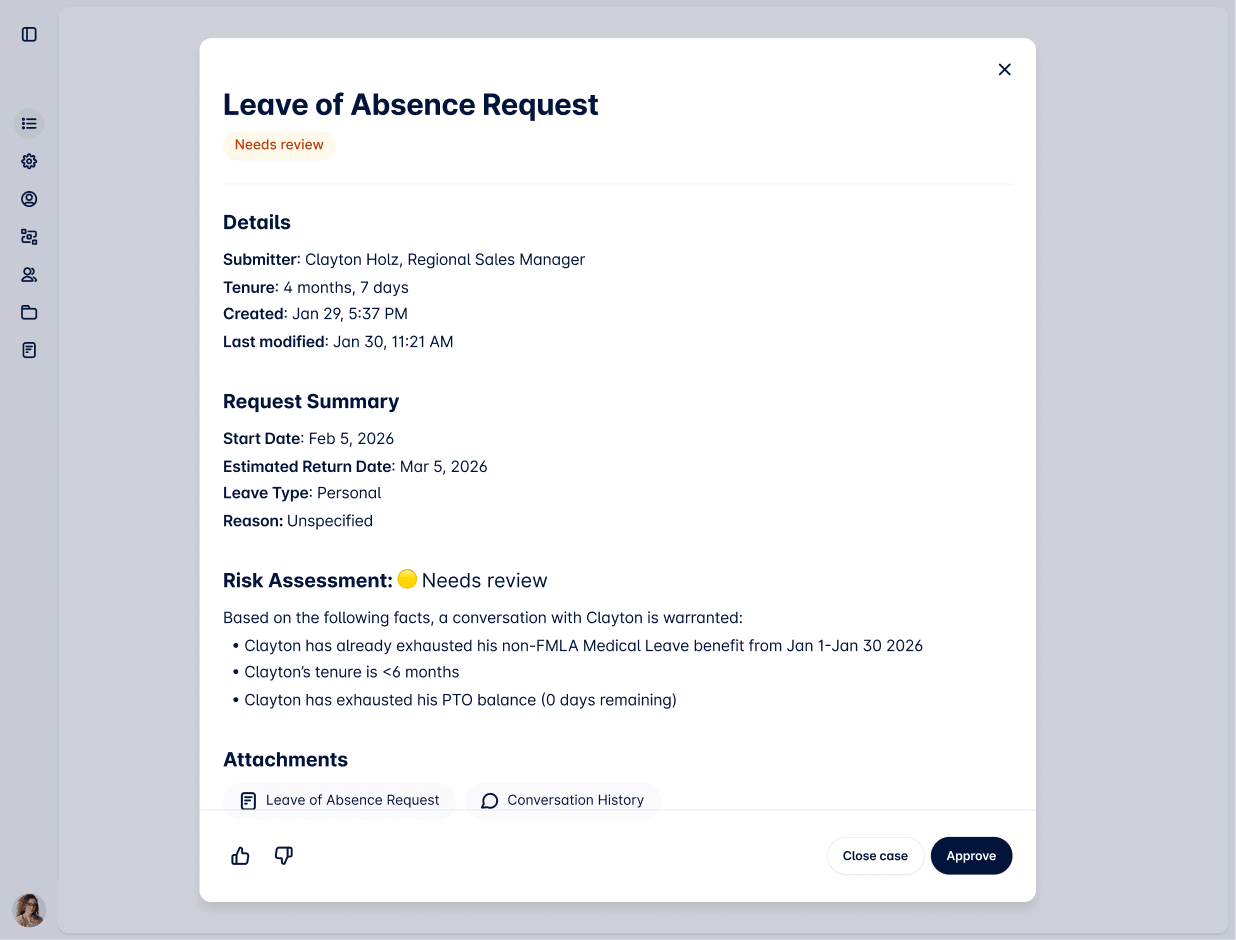
Documentation & Compliance
Complete Record Keeping. Every ER-related interaction is documented.


Manager Support for ER
Managers often face ER situations without training. Harper provides just-in-time support.
"An employee just told me something concerning about a colleague..."
Harper guides the manager on:
- Listening actively
- Documenting what was shared
- Reporting to HR appropriately
- Maintaining confidentiality
- Avoiding retaliation
"How do I have a difficult conversation about performance?"
Harper guides the manager on:
- Conversation frameworks
- Documentation guidance
- HR escalation criteria
- Follow-up expectations
Measurable Results
- First-response time
- Routine inquiry handling
- Policy accuracy
- Employee satisfaction
- HR capacity for strategic work

- 2-3 days
- 100% HR time
- Variable
- Baseline
- Limited
.png)
- Seconds
- 80% automated
- 99%+ consistent
- +30% improvement
- 35+ hrs/month freed
Integration with ER Systems
Harper connects with your existing employee relations infrastructure.
- Service Now HR Service Delivery
- Workday Help
- HRIS employee relations modules
- Slack and Microsoft Teams
- Email, including shared inboxes
- Web and Native Mobile Apps
- SharePoint
- Intranets
- Document management systems
Frequently Asked Questions
Harper's ER responses are carefully designed and constrained. It acknowledges, gathers facts, and routes—it doesn't investigate, or promise outcomes. All responses are logged for review.
No. Harper handles intake, fact finding, rapid response, and routing. Investigation, resolution, and judgment require human professionals. Harper gives those professionals better information and more time.
Harper can collect statements from multiple parties involved in an incident and compare responses, but Harper doesn't assess credibility—that's human HR's role. Harper documents what's reported and routes appropriately. The investigation process determines facts.
Research shows many employees prefer initial AI contact for sensitive matters—it feels less exposed than face-to-face, and there's no concern about the immediate reaction of the person they're telling. Harper's role is intake, routing, and AI recommended actions, but not resolution for sensitive ER cases.
See What Harper Can Do for Your HR Team
Meet the AI HR generalist built for the complexity of real workplaces.